


Table of Contents
Introduction
There’s no denying that a brownie cake is one of the most genuinely appealing desserts. So, the real question for most cafes isn’t whether patrons would enjoy it. It’s whether stocking the ingredients to make one consistently is worth the effort.
Running a café needs constant weighing of what’s worth adding to the pantry. This is exactly where a ready-formulated premix changes the calculation. Brownie Cake Premix from Nitin’s Premixes gives cafes a way to add this dessert to their stock without sourcing, storage, and consistency challenges.
Why Stocking a Premix Makes More Sense For Cafes
A brownie cake sounds simple on paper. However, recreating its exact fudgy-yet-sliceable texture batch after batch is significantly challenging. Here’s what actually makes stocking a dedicated brownie cake premix a more practical choice:
1. One Pack Replaces a Long Ingredient List
Making a brownie cake from scratch means sourcing and storing cocoa, flour, sugar, a fat source, and a leavening agent. Each comes with its own shelf life and storage requirement. A brownie cake premix consolidates all of this into a single sealed pack. This cuts down the number of separate line items a kitchen needs to track and reorder.
For cafes juggling dozens of ingredients across their menu, this kind of consolidation adds up. Fewer individual ingredients to monitor means fewer chances of running out of one component mid-week and having to pause production.
2. Shelf Life Works in the Kitchen’s Favour
Fresh ingredients for a brownie cake carry limited shelf lives and would need refrigerated storage. This adds pressure to use them before they’re spoiled. A dry premix, by contrast, is shelf-stable at room temperature for a significantly longer window. This gives café kitchens far more flexibility in how they plan stock levels.
This matters most for cafes with unpredictable footfall, where demand for a specific dessert can swing week to week. A shelf-stable premix means unused stock isn’t a wastage risk the way perishable ingredients would be.
3. Costing Becomes Predictable
When a recipe depends on multiple fresh ingredients, the cost per serving shifts as market prices for those ingredients move. A premix locks in a large part of that cost into a single, known price per pack. This makes menu pricing and food-cost percentage calculations considerably easier to manage.
This predictability is particularly useful for cafes operating on tight margins. For such cafes, even a small ingredient’s price swings across a month can quietly erode profitability on a popular item.
4. Staff Doesn’t Need Pastry-Level Skill to Get It Right
Getting a brownie cake’s exact texture right by hand depends on precise ratios and careful mixing. This typically requires a baker with real pastry experience. A premix removes most of this dependency, since the formulation work has already been done. Staff members can thus follow a straightforward process instead of calibrating ratios themselves.
This matters more than it might seem in cafes with high staff turnover. In such cafes, relying on one specific baker’s skill to consistently reproduce a dish creates a real operational risk if that person is unavailable on a given day.
5. It Cuts Down Preparation Time During Busy Hours
A from-scratch brownie cake recipe involves multiple preparation steps, melting, mixing, and carefully folding ingredients in sequence. A premix simplifies this into a shorter, more direct process.
This matters during high-volume periods when kitchen staff is already stretched across multiple orders. Faster preparation also means a café can restock its dessert case more quickly if a batch sells out during a busy weekend. This is far better than being caught with an empty display until the next scheduled bake.
6. It Scales Cleanly for Bigger Batches
A premix scales in fixed, predictable proportions, since the ratios are already built into the formulation. This makes it considerably easier for cafes to prepare for demand spikes around festivals or weekends. The best part is that they can do this without needing to test a scaled-up batch beforehand.
Scaling a from-scratch recipe up for a festive weekend or a catering order means recalculating every ingredient proportionally. This increases the risk of a small miscalculation throwing off the final texture.
7. One Premix, Multiple Menu Uses
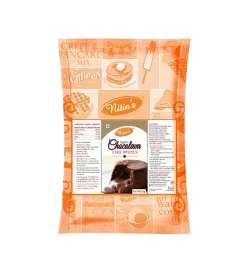
Brownie Cake Premix from Nitin’s Premixes is built with exactly this kind of flexibility in mind. It gives cafes one reliable base to work several dessert formats around instead of a single fixed recipe.
Beyond the base brownie cake slice, the same premix can be adapted into a warm dessert with ice cream. It can also be adapted into a layered dessert with ganache or a jar-style takeaway portion. Stocking one premix that supports several menu formats is a more efficient use of pantry space.
Conclusion
A brownie cake premix isn’t really about the dessert itself. It’s about what it removes from a café’s day-to-day operations. Fewer ingredients to source, a longer shelf life, predictable costing, and less dependency on any one staff member’s baking skill all add up to a dish that’s genuinely easier to run at scale.
For cafes weighing whether a new dessert is worth adding to their pantry, these operational advantages truly matter. Brownie Cake Premix from Nitin’s Premixes gives cafes exactly this kind of practical starting point. This makes it a straightforward addition to stock rather than a complicated one to commit to.
How Frozen Yogurt Desserts Increase Profitability of Cafes
Discover how cafés can boost their profit margins with irresistible desserts prepared using frozen yogurt dessert premixes from Nitin’s Premixes.
Comments are closed.