


Introduction
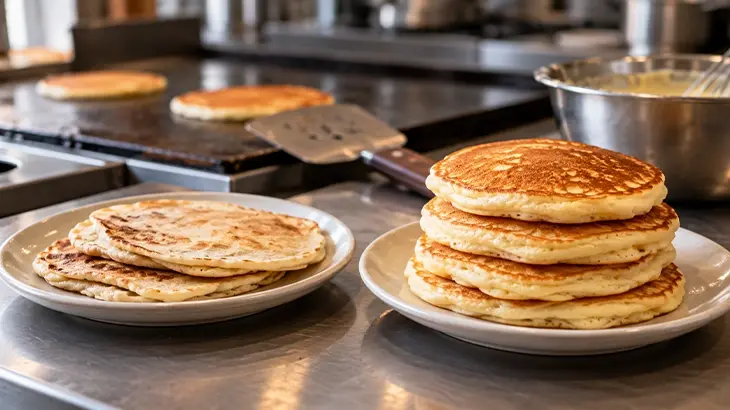
Nothing frustrates a café kitchen staff more than a pancake that turns out flat, tough, or rubbery. These problems rarely come from a bad recipe. They often come from small, repeatable slips in mixing, resting, heat, and holding. A busy day of service just makes things worse.
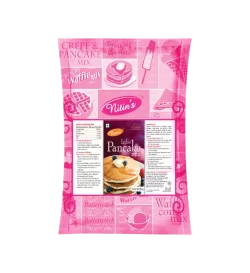
The good news is that each cause is easy to spot once you know what to look for. The Pancake Mix from Nitin’s Premixes removes several of these problems before the batter is even made. Now, let’s take a look at the most common pancake problems cafes face, why they happen, and how to fix them.
Common Pancake Problems and How Cafes Can Fix Them
The best way to start is to notice the symptom on the plate and work back to the cause:
-
Tough, Chewy, or Rubbery Pancakes
Gluten starts forming the moment flour meets liquid, and stirring speeds it up. Too much of it makes pancakes dense and chewy rather than soft. The fix is to mix only until the dry flour disappears. Small lumps are fine, since many of them smooth out during resting. Instead of simply telling the staff to keep mixing until smooth, cafes must give them a specific number of times to fold or mix the ingredients.
-
Flat Pancakes
There’s a second problem that’s caused by overmixing. Vigorous stirring pops the air bubbles that the leavening has created. As a result, pancakes spread thin instead of rising. Pressing down on the pancake with a spatula during cooking has the same effect. It squashes the structure just as it sets.
In pancakes baked from scratch, old baking powder is another common culprit. Open tins are commonly said to lose strength after about six months. The Pancake Mix from Nitin’s Premixes comes with the leavening already blended in fixed proportions. So, cafes don’t need to rely on a tin opened months ago. Moreover, less stirring is needed to spread it through the batter.
-
Too Little or Too Much Rest Time
Resting lets the flour hydrate, the gluten relax, and the leavening spread evenly through the batter. Skipping it can give uneven, dense pancakes. Most pancake guides suggest resting times from a few minutes to around half an hour. After roughly an hour the bubbles begin to collapse on their own.
These numbers disagree because the right rest time depends on the formulation. For a café, the practical approach is to test one rest time for each product, set a timer, and follow the same timing for every service.
-
Batter Temperature Changes the Outcome
Leavening generally works faster in warmer batter. A rest time that suits an air-conditioned kitchen can overshoot in a hot one, especially in Indian summers. This is a factor pancake guides rarely mention. Cafes that notice pancakes rising differently between morning and afternoon should check batter temperature before blaming the recipe.
-
Pancakes Get Flatter as the Day Goes On
This is a problem unique to commercial kitchens. A large morning batch sits through service, and the leavening keeps working while it waits. Pancakes served late in the day come out flatter than the ones served early in the morning. This is because a batter long held or a day old loses its lift. The fix is to mix in small batches, label each container with the time it was made, and set a maximum holding window based on the café’s own testing.
The leavening in a dry premix only starts working once liquid is added. The powder can thus sit sealed through service and be hydrated in small batches as orders come in. The Pancake Mix from Nitin’s Premixes suits this approach well, since a fresh batch takes minutes rather than a full preparation cycle.
-
Pale, Doughy, or Burnt Pancakes
A griddle that’s too hot burns the outside before the centre cooks. One that’s too cool gives pale, pasty pancakes that never brown properly. A temperature around 190°C is commonly cited as a good target. The batter sizzles on contact and bubbles appear within about thirty seconds. The café-specific catch is that the surface cools every time cold batter hits a crowded griddle.
A thermostat setting also doesn’t always match the real surface temperature. So, cafes must spot-check the surface with an infrared thermometer at the start of service and again after a rush. They can pour a small amount of pancake batter onto the griddle before cooking a full batch. Then, they can check whether the surface temperature is right.
-
Pancakes Turn Rubbery After They’re Cooked
Not every rubbery pancake is the result of a mixing problem. Stacking hot pancakes under a lid traps steam, which softens the crust and turns the texture gummy within minutes. Cafes must serve the pancakes quickly, and avoid stacking them too high or covering them tightly. If holding is unavoidable, they can use an open rack for a short time. For delivery, packing syrup separately and venting the container can make a noticeable difference.
How a Premix Removes Several of These Problems
Making pancakes from scratch depends on several ingredient-specific factors. Flour type matters, since high-protein flours such as bread flour turn tough more easily when overmixed. Leavening freshness and quantity also matter, so does every hand-measured ratio. The Pancake Mix from Nitin’s Premixes arrives with the dry ingredients already blended in fixed proportions.
This settles the factors before the cooking begins. A premix doesn’t replace technique. Liquid quantity, gentle mixing, resting, griddle heat, and holding still belong to the kitchen. However, with ingredient-specific causes removed, troubleshooting narrows to those few steps instead of a dozen. Cafes must also keep opened packs sealed, since moisture can set leavening off early.
A Quick Diagnosis Guide
When a complaint comes in, cafes must match it to the likely cause:
- Tough and chewy: check how long the batter was mixed.
- Flat from the start: check mixing, resting time, and whether pancakes were pressed down.
- Flat late in the day: check how long the batter was held.
- Pale or doughy: check griddle surface temperature.
- Soft and rubbery on the plate: check holding and packaging.
Conclusion
Most pancake complaints look random until cafes track them. For one week, they need to log the time each batch was mixed, the griddle temperature at the start of service, and any complaint that comes back, with the hour it happened.
Patterns usually appear quickly, and one or two causes tend to account for most problems. Fixing those is far cheaper than changing the recipe. The Pancake Mix from Nitin’s Premixes gives cafes a consistent starting point. So, the only things left to manage are the steps their own team controls.
How Frozen Yogurt Desserts Increase Profitability of Cafes
Discover how cafés can boost their profit margins with irresistible desserts prepared using frozen yogurt dessert premixes from Nitin’s Premixes.
Comments are closed.